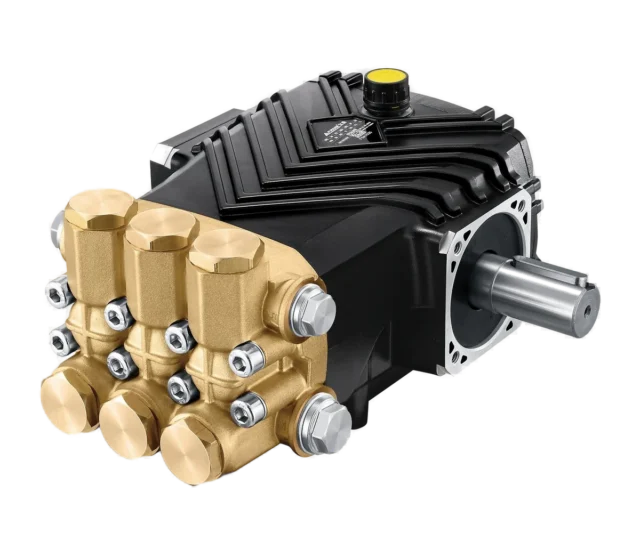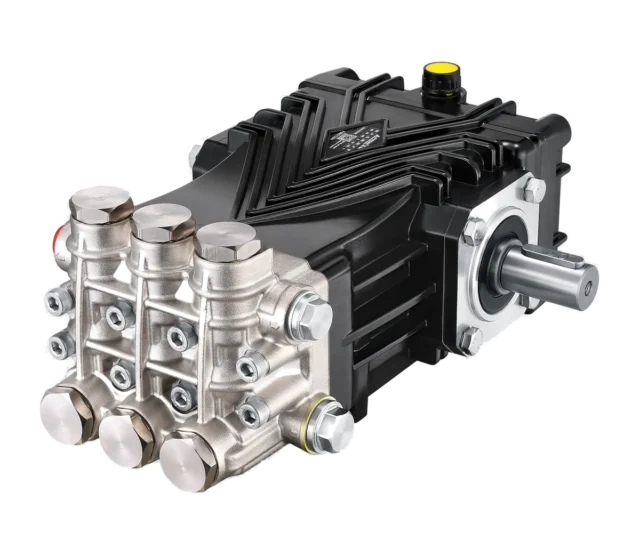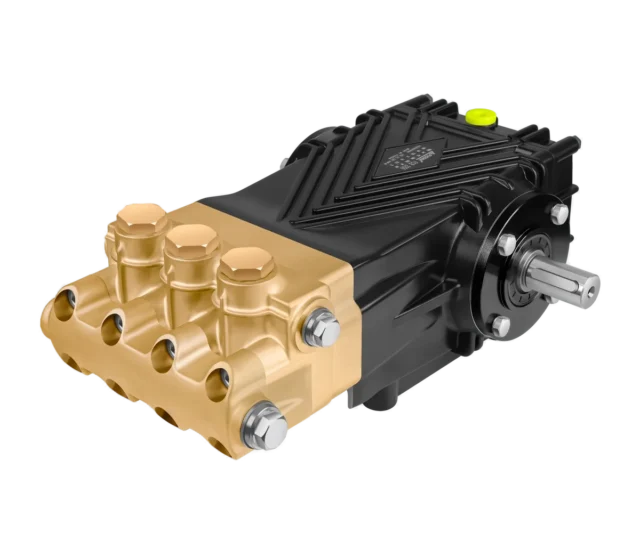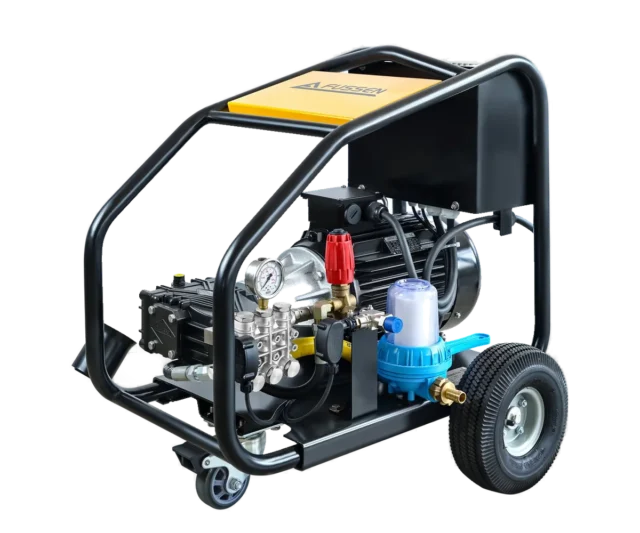
A useful maintenance plan combines routine inspection with the service requirements of the exact pump and washer. Record the model, serial number, fluid conditions and operating hours before choosing parts or intervals.
Build the schedule from the manual
Before use, check oil level and condition, water supply, filters, hoses, connections and visible leaks. During operation, watch for unusual noise, pressure changes and overheating. Keep a service record so changes can be compared with the machine's normal behaviour.
Oil-change and seal-replacement intervals vary with model and duty. Do not apply a single 50/500/1000-hour schedule to the entire range. Use the specified lubricant and filling procedure. “Non-detergent” does not mean free of all additives, and an oil with similar viscosity is not automatically an approved substitute.
Size the inlet without starving the pump
Confirm the manufacturer's inlet pressure range and temperature limit at the running pump. Include filter and pipe losses, available head and the dynamic filling requirements of a reciprocating pump. A tank or booster is selected from these conditions, not from one universal pressure rule.
For an illustrative mean-velocity target of 1 m/s, minimum internal diameter follows d = √(4Q/πv), with Q in m³/s. At 20, 40 and 80 L/min, calculated diameters are about 20.6, 29.1 and 41.2 mm. These are arithmetic minima for that target, not finished pipe specifications. Final sizing also needs inlet-loss and cavitation checks.
Specify filtration in an actual aperture or micron rating with its efficiency and pressure drop; mesh count is not the same as micrometres. Select filter cleaning frequency from contamination and condition. Prevent dry running rather than relying on a supposedly tolerable number of seconds.
Investigate low pressure systematically
First confirm pump speed, water availability, inlet air leaks and filter condition. Then check the correct nozzle, pressure-control settings and unintended bypass. Valves and seals are further possibilities, not conclusions from a pressure reading alone.
Use only the manufacturer's flow-test procedure. Where an open-discharge measurement is permitted, shut down, isolate and depressurise before removing a nozzle or changing connections; secure the discharge and restart only in the specified test configuration. Do not direct a high-pressure jet into a measuring bucket. Normal low-pressure flow does not rule out leakage that increases under load.
Stop and investigate abnormal symptoms
Milky oil can indicate water ingress or condensation. Leakage, pulsation and knocking can have several causes. If a defect makes operation unsafe or falls outside the manual's limits, stop, isolate and depressurise before inspection. Clear evidence of seal or valve damage should be matched to the correct part number and repair procedure.
Manage bypass and temperature
There is no universally safe three-minute bypass time. Heating depends on pressure drop, flow, circulating volume, return arrangement and heat loss. Distinguish low-pressure unloading from continuous high-pressure bypass. Follow the system's permitted idle conditions and temperature protection; do not alter relief settings using a generic percentage.
Store and repair by model
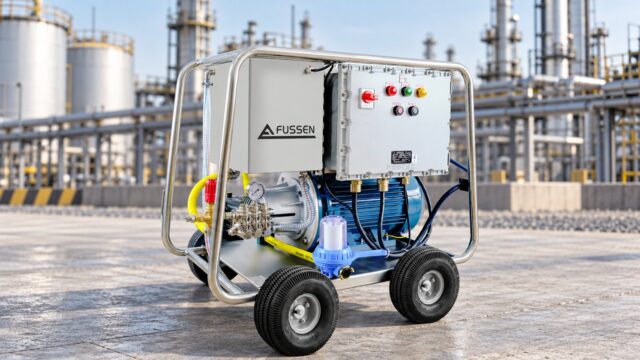
Use the prescribed freeze-protection method for the pump, heater and accessories, with compatible products and disposal arrangements. Do not substitute a universal antifreeze mix or compressed-air pressure. FHE electric heaters and fuel-fired FHP/FHS units require their respective storage procedures.
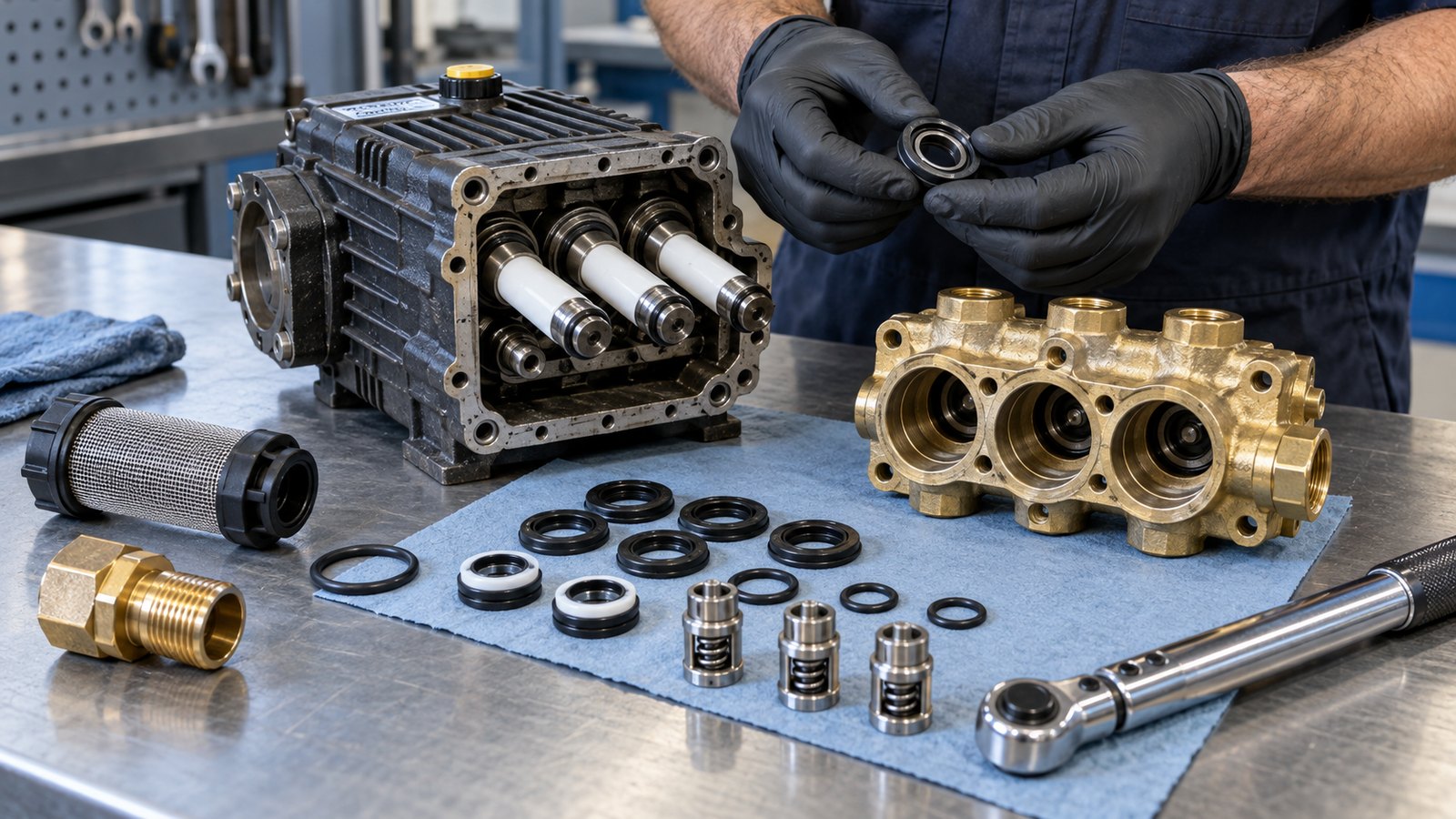
Before repair, isolate all energy, release stored pressure and let hot parts cool. Use model-specific torque values and verified seal, valve and plunger kits. Repair-versus-replacement decisions should consider condition, parts, labour and downtime rather than a fixed cost percentage.
Related equipment
References and product documents
Fussen pump parts manual; Cat Pumps: service FAQ
Frequently asked questions
How often should I change the oil?
Use the interval and lubricant specified for the exact model and duty. Record oil condition and hours; generic intervals from another pump are not a substitute.
Does low pressure mean worn valves?
No. Supply, speed, nozzle, pressure control, bypass, valves and seals can all contribute. Diagnose in sequence using the service procedure.
Can the pump remain in bypass for three minutes?
Do not assume so. The permitted duration depends on the actual circuit and temperature protection; follow the machine's instructions.

Fussen has designed and manufactured high pressure plunger pumps and industrial washers in Foshan, China since 2001. ISO 9001 / 14001 / 45001, CE and ATEX-certified, exporting to more than 60 countries.