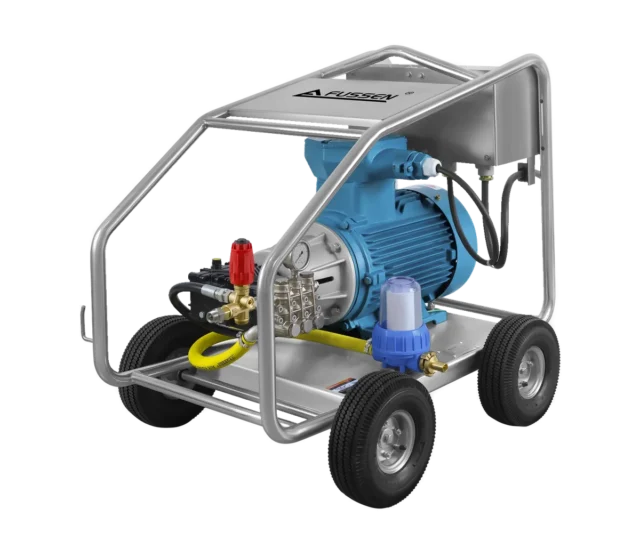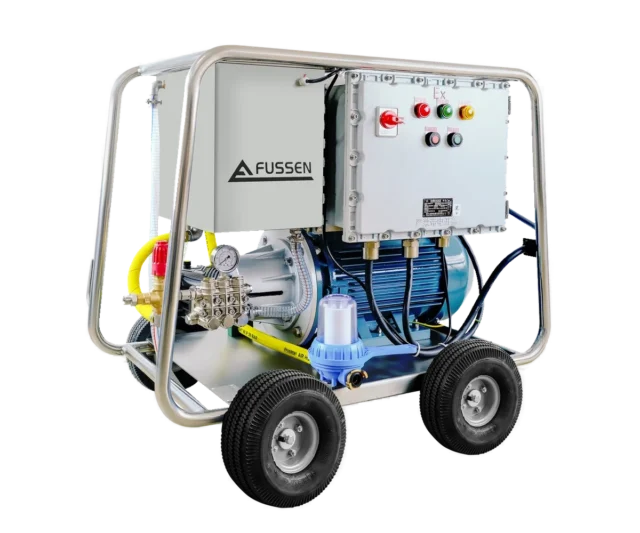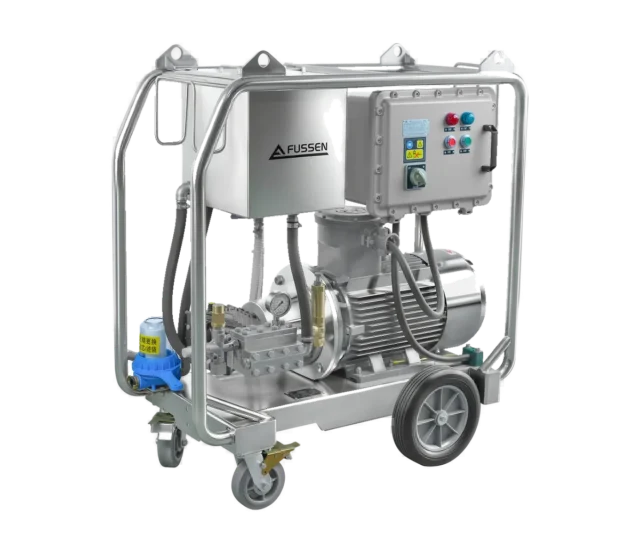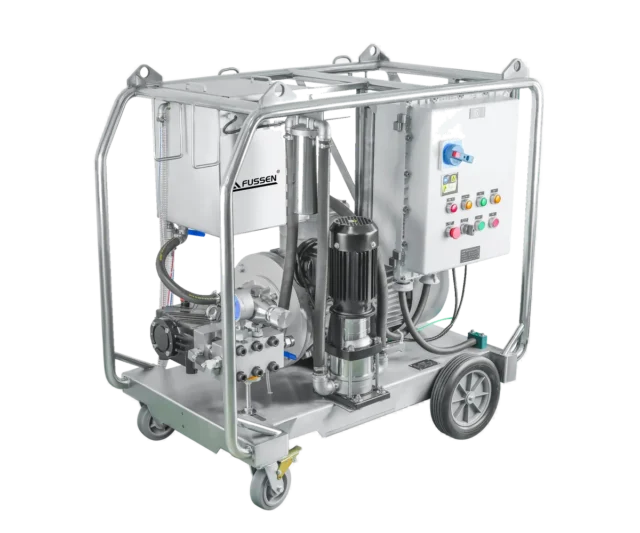
Selecting a washer for an explosive atmosphere requires the site's classification and the documents for the exact machine. An electric motor, a component certificate or a general “explosion-proof” label is not enough to establish complete-system suitability.
Start with the site classification
Obtain the area classification, gas or dust identity, temperature data, ambient conditions and the task description. Under the usual ATEX zone/category relationship, the minimum category is shown below; higher protection may also be suitable when all other conditions match.
| Atmosphere / zone | Minimum category | EPL |
|---|---|---|
| Gas / Zone 0 | 1G | Ga |
| Gas / Zone 1 | 2G | Gb |
| Gas / Zone 2 | 3G | Gc |
| Dust / Zone 20 | 1D | Da |
| Dust / Zone 21 | 2D | Db |
| Dust / Zone 22 | 3D | Dc |
Gas and dust approvals are distinct. Category 2G does not establish dust suitability, and Category 2D does not establish gas suitability. Moving the pump outside a Zone 0 vessel does not automatically make the hose, lance and non-electrical tools suitable inside it; assess the entire operation and ignition risks.
Read the complete marking
Equipment group, category, gas or dust group, protection concept, temperature and EPL must all match the application. IIC concerns gas-group suitability; it does not override temperature or other restrictions. A T4 gas rating limits the relevant maximum surface temperature to 135°C under the assessed conditions. A dust marking such as T130°C states a surface-temperature limit, not permission for every combustible dust.
T5 means 100°C and T6 means 85°C. Carbon disulphide is listed by Eaton at about 90°C auto-ignition temperature and in T6; T5 must not be offered as an interchangeable choice. Use verified data for the actual substance or mixture and apply the relevant selection requirements.
Distinguish protection concepts
Ex d uses a flameproof enclosure to prevent transmission of an internal explosion. Ex t protects against dust through enclosure protection and temperature limitation; it is not simply a dust version of flameproof containment. Other symbols describe different protection measures. The marking alone does not reveal every internal circuit or establish spare-part interchangeability.
An X suffix identifies special conditions of use in the certificate. Read these conditions, the permitted ambient range and the installation instructions, not just the main marking.
Check the applicable conformity route
ATEX 2014/34/EU Article 13 distinguishes equipment categories and types. For Category 2 electrical equipment and internal combustion engines, the route includes EU-type examination with an applicable production-conformity procedure; other Category 2 equipment has a different route involving internal production control and deposited technical documentation. Unit verification is another route provided by the Directive.
For the supplied assembly, obtain its EU declaration of conformity, applicable certificates with schedules, production-conformity documentation where required, identification and instructions. Component approvals do not by themselves establish the conformity of the whole assembly. A quality-assurance notification is not the only possible production route in every case.
Confirm the quoted Fussen configuration
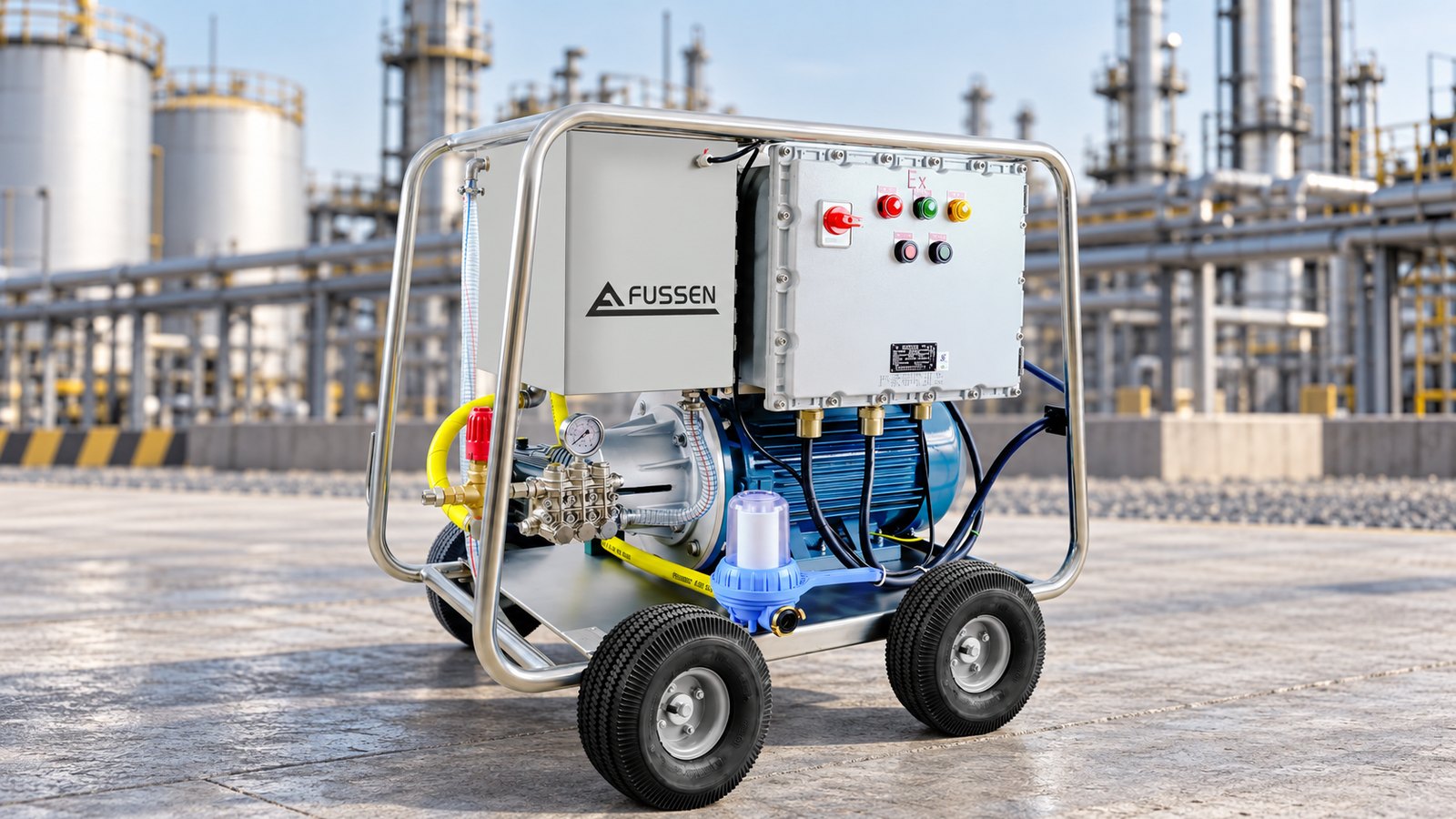
Fussen's available type-examination document is numbered ECM 25 ATEX-B DQ70 and names specific models. Confirm that the quotation, nameplate, model designation and supplied configuration match the complete applicable documents. Do not extend coverage to every pressure, flow or accessory in a commercial series solely because the series names are similar.
A type-examination document addresses the examined design; additional manufacturing and supply obligations remain. Ask for the exact permitted hose, gun, earthing/bonding arrangements and replacement parts. Do not assume a standard washer's accessories are interchangeable with an assessed Ex configuration.
Equipment selection is part of the work plan
Certification does not remove the need for the site's isolation, ventilation, gas/dust assessment and work-permit procedures. An assessed washer does not automatically allow cleaning an operating spray booth without isolation. Confirm installation, continuity checks, thermal protection, maintenance and inspection using the supplied instructions and the site's responsible personnel.
Related equipment
References and product documents
ATEX 2014/34/EU, Article 13; Eaton: gas temperature classes
Frequently asked questions
Is a T4 IIC machine suitable for every gas?
No. Gas group and temperature are separate conditions, and the full marking and application limits must match the actual atmosphere. Carbon disulphide requires particular attention to its low ignition temperature.
Can only electric drives be assessed under ATEX?
No. The Directive also provides routes for internal combustion engines. Suitability still has to be established for the specific complete equipment and application.
Does one certificate cover every model in a series?
Not automatically. Confirm model and variant coverage in the complete documents, including schedules and the supplied configuration.

Fussen has designed and manufactured high pressure plunger pumps and industrial washers in Foshan, China since 2001. ISO 9001 / 14001 / 45001, CE and ATEX-certified, exporting to more than 60 countries.