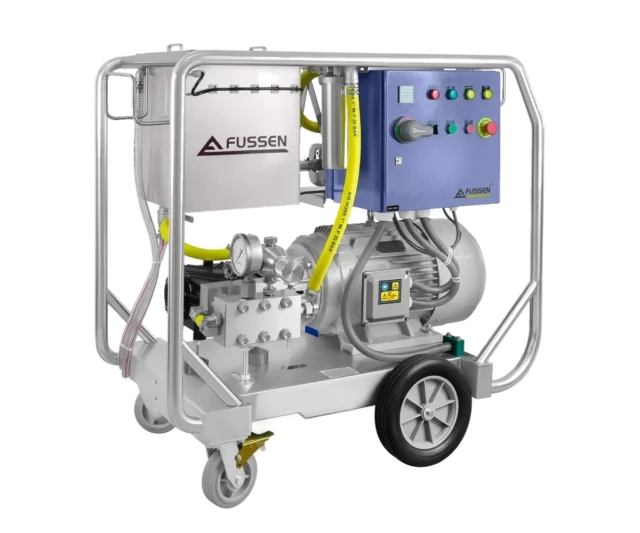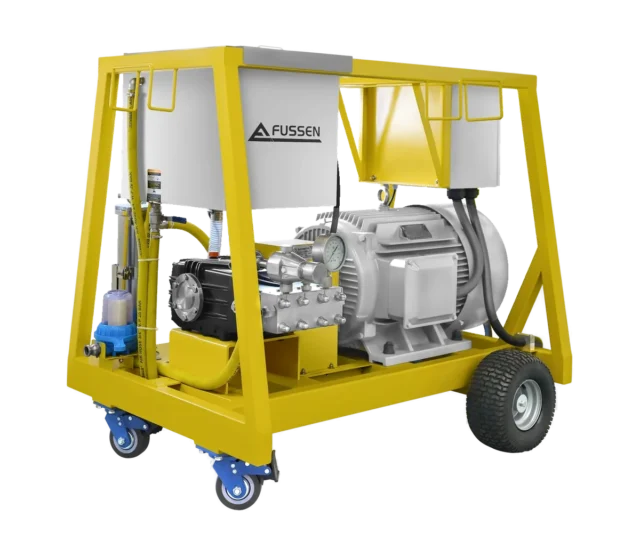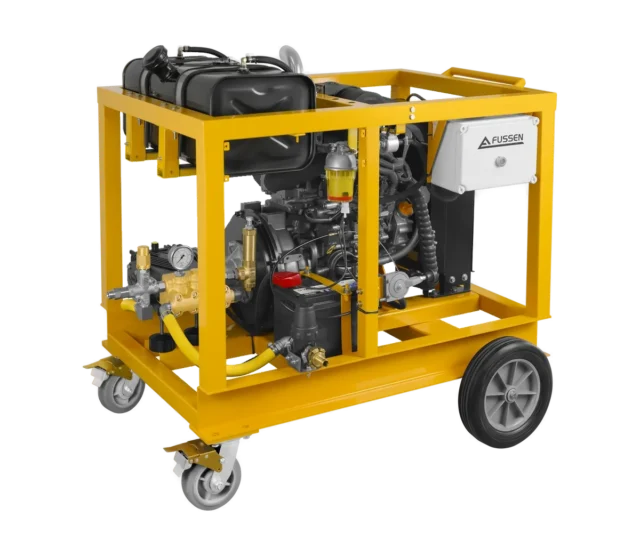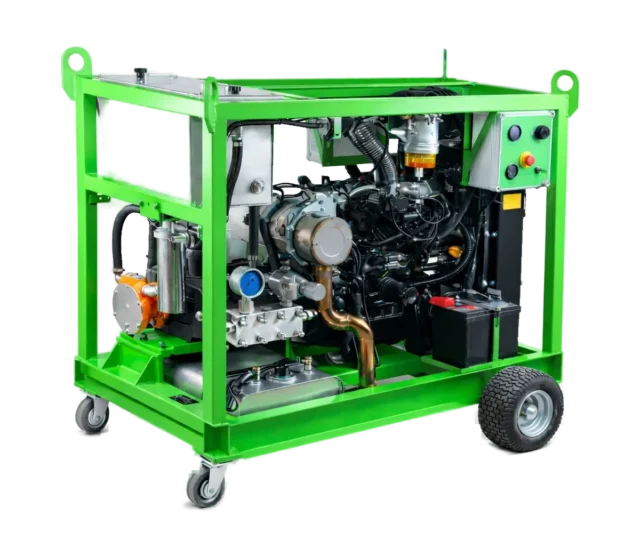
Choose the process from the required surface condition, not pressure alone. Cleanliness, soluble salts, surface profile and permitted flash rust are separate requirements.
What each process can achieve
Abrasive blasting can remove rust and coatings while creating or modifying an anchor profile. Pure-water jetting generally reveals the existing profile rather than creating the new abrasive profile required for some coating systems. Whether the retained profile is adequate must be checked against the coating specification.
Do not describe mill scale removal as impossible with water. Hempel's surface-preparation guidance notes that at pressures above about 1700 bar, water jetting may remove mill scale, although slowly. That capability does not establish a new anchor profile or make the process economical for every job.
Define the acceptance criteria
Agree the specified standard and edition, visual cleanliness, soluble-salt limits, profile and acceptable flash rust before selecting equipment. WJ and ISO Wa designations belong to different assessment systems and should not be treated as interchangeable labels. A pressure setting is not proof of an achieved cleanliness grade.
Pressure-class names vary with the referenced system. State the actual bar rating alongside any “high pressure” or “ultra-high pressure” description. A product family's commercial name does not define the result it will achieve on a particular coating.
Run a representative trial
Record substrate, coating type and thickness, adhesion, nozzle type, standoff distance, traverse speed, pressure and flow. Measure accepted area per total working hour, including setup, repositioning, water recovery and inspection. Compare more than one suitable configuration where practical.
More flow may improve removal and transport of debris, but doubling flow does not guarantee twice the area per hour. Do not use an unsupported production-rate table as a quotation or delivery commitment.
Count the waste streams correctly
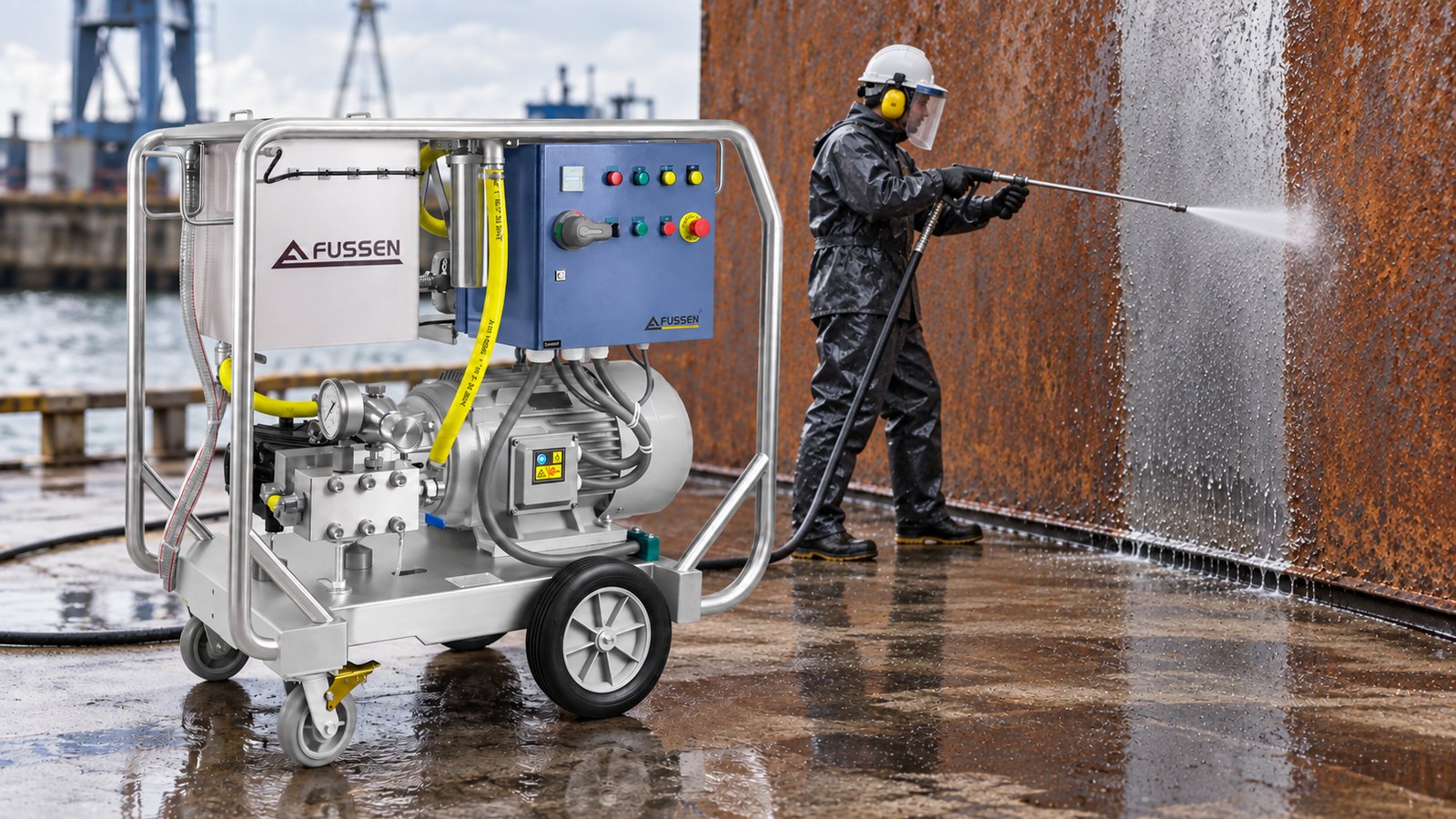
Water jetting avoids adding expendable abrasive and can reduce abrasive dust and solid waste. It still creates contaminated water, wet debris and potentially hazardous mist. Existing coatings may contain hazardous constituents. Plan containment, collection, treatment and disposal for the actual contaminants; removing suspended solids alone does not prove that discharge is acceptable.
Compare total process cost: equipment, energy, water, abrasive, labour, containment, treatment and downtime. A fixed claim such as “90% less waste” needs a defined baseline and project data.
Select the complete jetting system
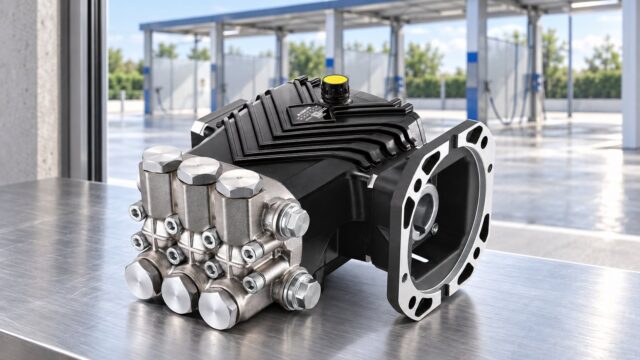
Size the pump for the pressure and flow that succeeded in the trial, with the required duty and inlet conditions. A range's highest flow and highest pressure are not necessarily available together. Confirm plunger material by model: FES and FES-G documentation lists alloy plungers, so the full range should not be called ceramic.
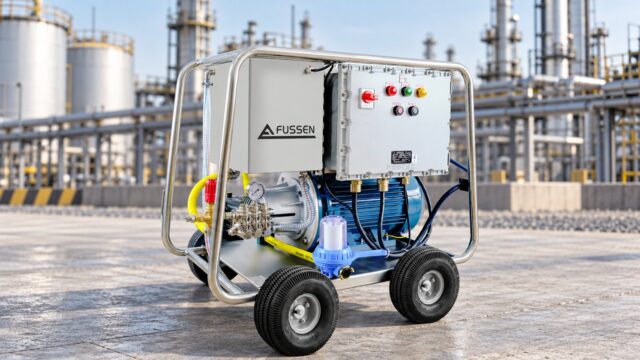
Match hoses, fittings, nozzles and controls to pressure, temperature and medium. Independent protection and relief settings must follow the system design and applicable requirements, not a percentage copied from another machine. Assess reaction force, support, exclusion zones, shutdown controls and protective equipment as part of the job.
Choose the method by the result
Where a new anchor profile is required, consider abrasive preparation or another process accepted by the coating specification. For previously prepared steel, water jetting may be suitable when it achieves the specified cleanliness, salt level and retained profile. Confirm the permissible flash rust and coating interval with the coating supplier.
Related equipment
References and product documents
Hempel: surface preparation; Safe Work Australia: high-pressure water jetting; Fussen pump parts manual
Frequently asked questions
Can pure-water jetting remove mill scale?
It can under suitable high-pressure conditions, but may be slow. This does not mean it creates a new abrasive anchor profile.
Does water jetting eliminate hazardous airborne contamination?
No. It can reduce abrasive dust, but contaminated mist and removed coating still require assessment and control.
Can I estimate output from pump flow alone?
No. Use a representative trial that includes coating condition, nozzle setup and the full working cycle.

Fussen has designed and manufactured high pressure plunger pumps and industrial washers in Foshan, China since 2001. ISO 9001 / 14001 / 45001, CE and ATEX-certified, exporting to more than 60 countries.