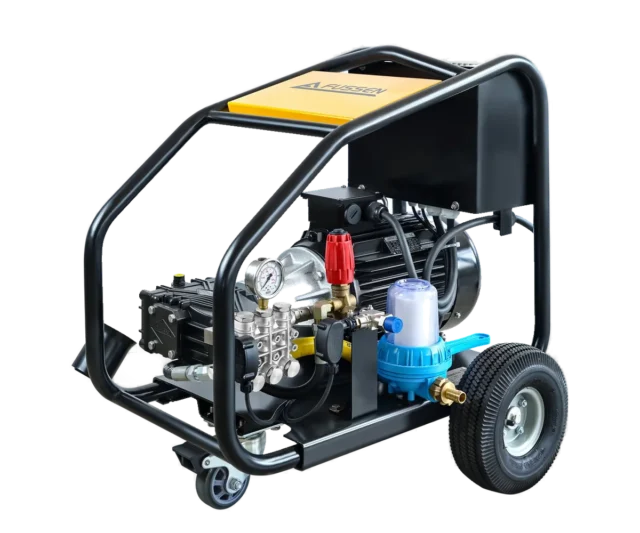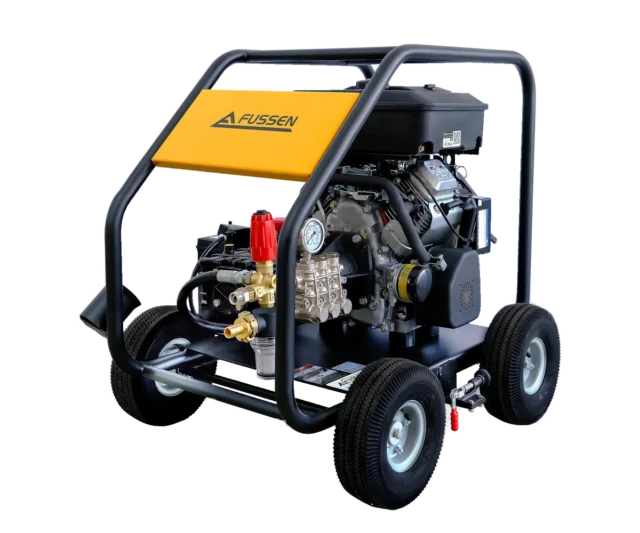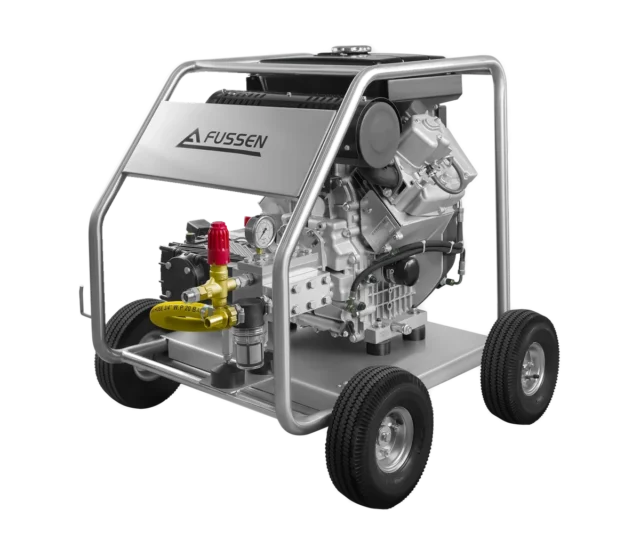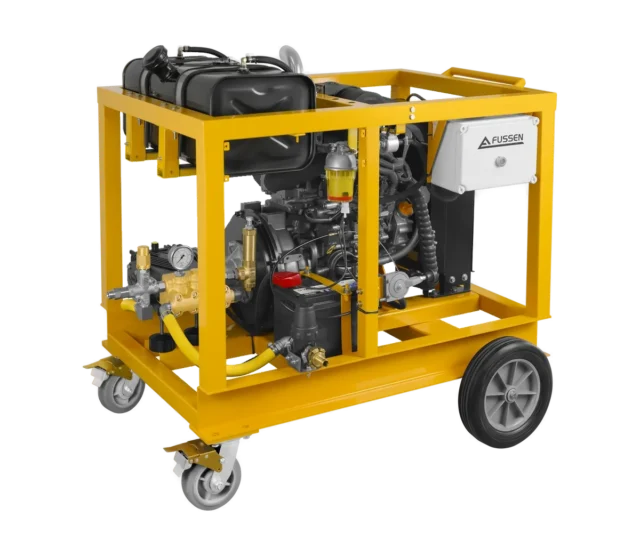
Choose the drive around available power, mobility and operating conditions. Pump drive and water heating are separate choices.
Compare equivalent operating points
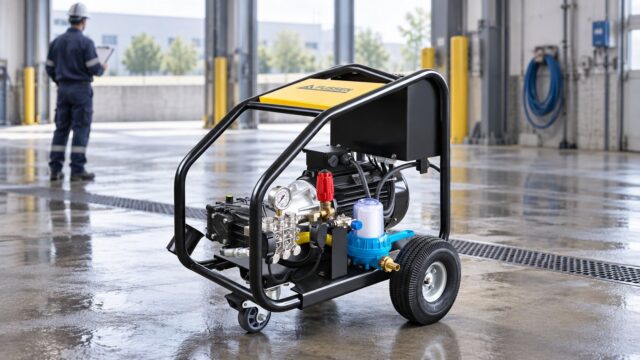
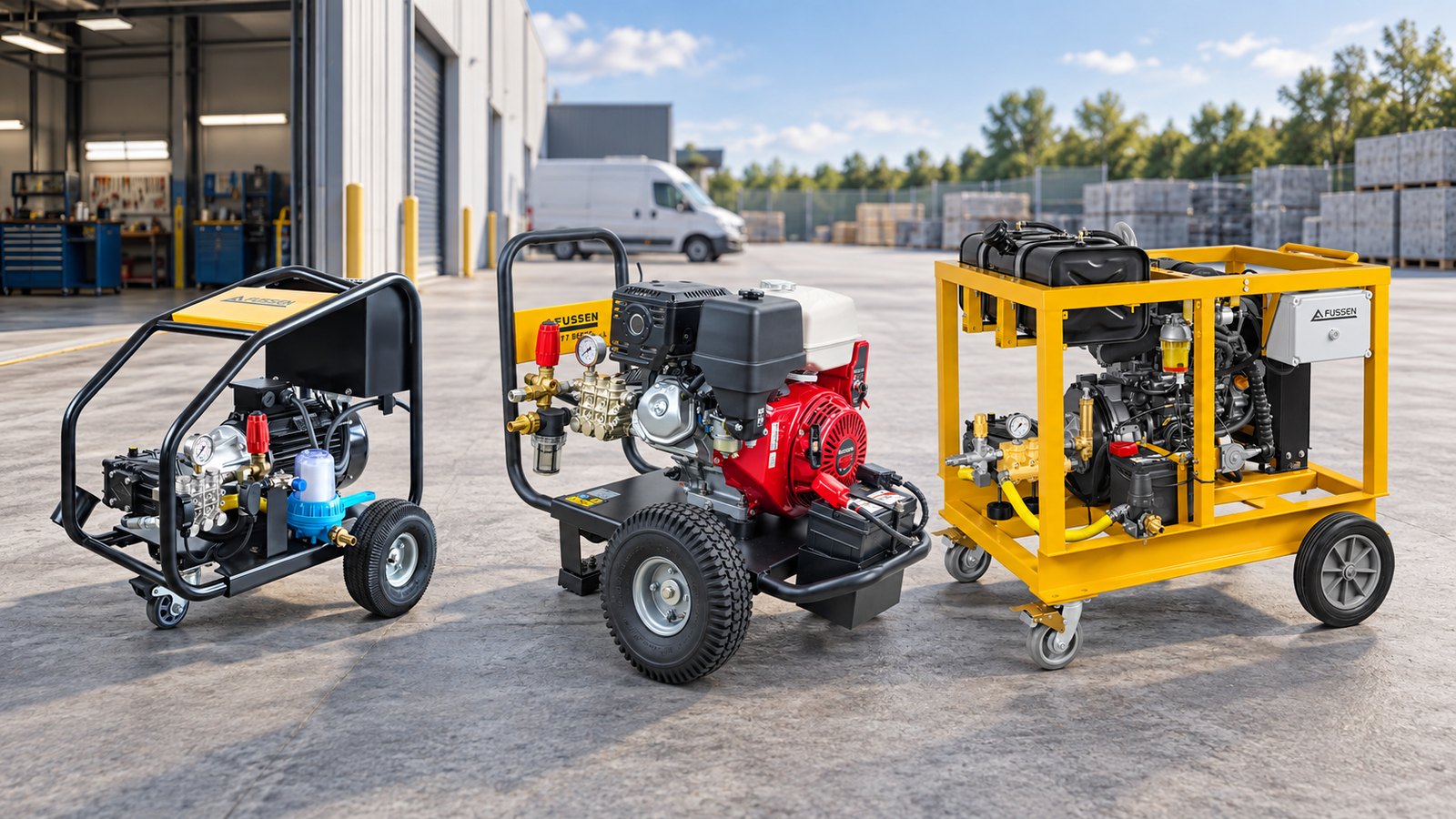
An electric drive avoids engine exhaust at the machine and can suit fixed installations with adequate supply. Petrol engines offer mobility for suitable outdoor tasks; diesel engines are often considered for larger mobile packages. Weight, noise, maintenance and fuel use must be compared for actual models at the same pressure and flow. There is no universal 30 kW boundary above which petrol power is impossible.
Match the motor and supply
At 250 bar and 18 L/min, hydraulic output is 7.5 kW. With an assumed pump overall efficiency of 0.88, shaft demand is about 8.52 kW; electrical input is higher after motor and drive losses. A 7.5 kW motor does not meet that duty merely because a socket can supply it.
Confirm voltage, frequency, running and starting current, protection and duty rating. A larger single-phase circuit may support a different machine; “single phase” alone is not a fixed 3 kW limit.
Treat frequency changes as a system change
If pump speed and flow rise by 20% with the same nozzle and no bypass regulation, nozzle pressure rises approximately 44% and hydraulic power approximately 73%. If pressure is regulated, power instead depends on the regulated operating point and bypass behaviour. Do not connect a 50 Hz machine to 60 Hz power without confirming the motor, pump speed and complete configuration.
Separate drive from heating
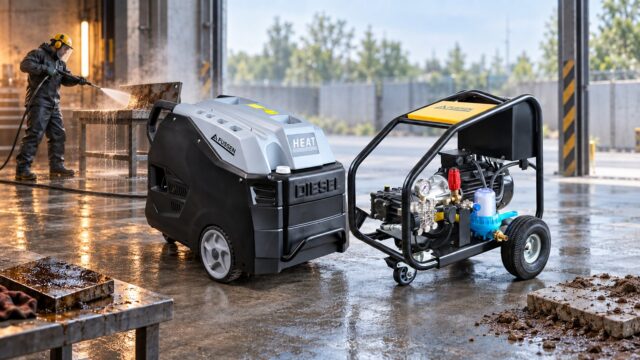
Fussen's FHE range uses electric heating. The FHP and FHS ranges use fuel-fired heating. An electric pump motor therefore does not, by itself, tell you whether the complete machine produces combustion exhaust.
In a pump-before-heater layout, the pump is selected for its inlet temperature; downstream valves, hose and gun must suit the heated water. Heating 15 L/min from 15°C to 80°C requires about 68.1 kW delivered to the water, before heater losses. Specify the required continuous temperature at the required flow, not just a thermostat maximum.
Check the installation and hazardous-area requirements
Use engine-driven portable washers outdoors in accordance with their instructions; do not treat an open door as adequate protection against exhaust. Fuel-fired heaters require a suitable approved installation with combustion air, exhaust handling and fire precautions.
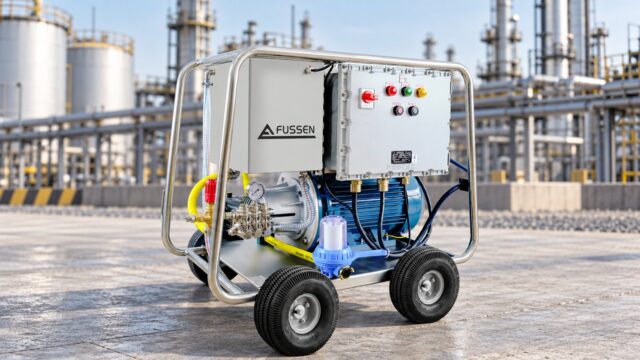
Hazardous-area suitability depends on the assessed equipment and its marking, not simply on electric versus engine drive. ATEX provides conformity-assessment routes for internal combustion engines as well as electrical equipment. Ordinary engines are not thereby approved for hazardous zones. Match the complete machine and accessories to the site's requirements.
Compare the actual cost
Use measured or documented electrical input and fuel consumption at the required load. Include service work, transport, downtime and heating fuel separately. Do not promise a fixed fuel saving or payback based only on the drive type.
Related equipment
References and product documents
Fussen pressure-washer catalogue; ATEX 2014/34/EU, Article 13; CDC: pressure-washer safety
Frequently asked questions
Does every electric hot-water washer need diesel?
No. FHE uses electric heating; FHP and FHS use fuel-fired heating. Check both the pump drive and the heater specification.
Can only electric equipment be suitable for an ATEX zone?
No. Suitability depends on the specific equipment, assessment, marking and site conditions. Neither an ordinary electric motor nor an ordinary engine is sufficient.
Can I run a 50 Hz washer on 60 Hz power?
Only after the manufacturer confirms the complete configuration. Speed, flow, pressure and power demand can change; nozzle and pressure-control behaviour matter.

Fussen has designed and manufactured high pressure plunger pumps and industrial washers in Foshan, China since 2001. ISO 9001 / 14001 / 45001, CE and ATEX-certified, exporting to more than 60 countries.